
Stop Building Trash Resource Libraries: How to Engineer High-Converting Toolkit Bundles

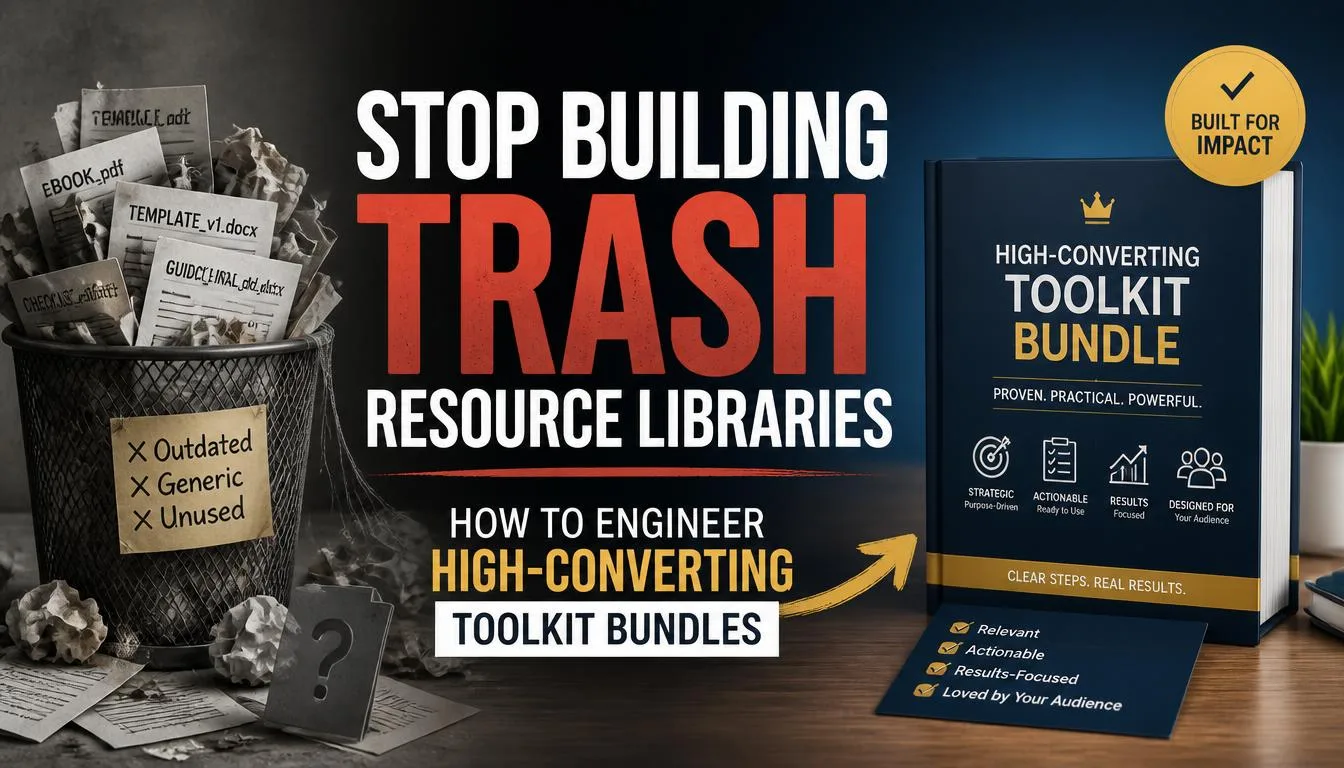
Most digital resource libraries are graveyards. Creators spend weeks designing gorgeous Notion templates, PDF checklists, and swipe files, drop them onto a bloated WordPress page, and wonder why their conversion rates hover below 2%. The reality is brutal: nobody wants more clutter. They want a frictionless bridge between their current pain and a finished outcome.
After auditing over 150 creator and B2B resource hubs, I've found that the difference between a library that collects digital dust and one that acts as a 24/7 revenue and list-building engine comes down to intentional architecture. If you are treating your toolkit bundle as a digital junk drawer, it’s time to re-engineer it from the ground up.
The Architecture of a High-Value Resource LibraryA high-converting resource library is not a random collection of your past work. It is a synchronized ecosystem of assets designed to accelerate time-to-value for the end-user. When someone enters your toolkit, they should feel like they just walked into a workshop where every tool has a designated hook on the wall.
1. The Core Transformation AssetEvery successful bundle needs an anchor—a flagship asset that solves 80% of the user's primary problem. If your niche is freelance copywriting, this shouldn't be a generic '10 Tips' PDF. It should be a battle-tested client onboarding template suite that saves three hours of administrative work.
2. Micro-Enablers (Friction Reducers)Surrounding your core asset are micro-enablers. These are hyper-specific, single-use tools that eliminate the micro-friction points preventing execution. Examples include:
- A 90-second Loom video demonstrating how to customize the core asset.
- A swipe file of proven email scripts to deploy the system.
- A keyboard shortcut cheat sheet tailored to the software being used.
A common trap is believing that more assets equal a better bundle. Creators exhaust themselves trying to hit an arbitrary number—like a '50-piece toolkit'—which invariably results in low-quality filler. Value in digital products is inverse to volume. The fewer assets you have, provided they are intensely potent, the higher the perceived and actual value.
When assembling your toolkit, apply the Rule of Immediate Applicability. If an asset requires more than 15 minutes of foundational explanation before the user can extract value, it does not belong in the primary bundle. Move it to an advanced tier or a separate module.
Technical Infrastructure: Choosing Your Tech Stack Without Overcomplicating ItTech paralysis kills more digital product launches than bad copywriting. You do not need a custom-coded React application to deliver a resource library. However, you do need an infrastructure that protects your intellectual property while offering an immaculate user experience.
The Modern Toolkit Tech Stack Options- The Notion Hub Approach: Best for content-heavy, text-and-template-based libraries. It’s cheap, incredibly fast to deploy, and familiar to modern knowledge workers. The downside? Security is weak, and unauthorized duplication is frictionless.
- Dedicated LMS/Portal (Memberstack, Kajabi, Circle): Best for paid bundles or high-ticket lead magnets. It allows you to lock content, track user engagement data, and segment your audience based on which assets they actually download.
- Dynamic Airtable Front-Ends (via Softr or Glide): The gold standard for data-rich toolkits. If your resource library is a searchable database of 100+ vetted tools, prompts, or resources, building a lightweight web app on Airtable and Softr creates an unmatched professional impression.
The metric that matters isn't the opt-in rate; it’s the consumption rate. If a user downloads your toolkit and never opens a single file, your customer lifetime value (LTV) and referral rates will flatline. They won't buy your downstream products because they associate your brand with unexecuted intentions.
To maximize consumption, structure your library onboarding like a flight checklist:
- The 60-Second Orientation: A prominent video at the very top of the library explaining the exact linear path the user should take. Do not let them wander. Tell them: "Step 1, open this. Step 2, copy that."
- Progressive Disclosure: Hide advanced resources behind completed actions or scheduled drip campaigns. Overwhelming a user on day one guarantees abandonment.
- Action Triggers: Embed calls-to-action directly inside the templates. If they are using your spreadsheet budget planner, include a hyperlinked cell pointing to your master financial forecasting course.Monetization and Laddering: From Free Lead Magnet to Paid Ecosystem
Resource libraries are the ultimate trojan horse for monetization. By packaging your best tactical assets into a cohesive bundle, you create a natural ascension ladder.
The Three-Tiered Resource Strategy- Tier 1: The Free Diagnostic Toolkit (Lead Magnet). Solves an acute surface-level problem and captures email addresses while establishing immediate authority.
- Tier 2: The Self-Liquidating Offer (SLO) Expansion ($27–$97). A comprehensive version of the library with advanced automation scripts, video walk-throughs, and community access, designed to offset upfront advertising costs.
- Tier 3: The Implementation Ecosystem (High-Ticket/SaaS). The library becomes a persistent perk of belonging to your core mastermind, agency, or software platform.
Even experienced operators butcher their resource libraries by committing classic execution errors. Watch out for these three lethal mistakes:
- Broken Link Syndrome: Linking to outdated Google Docs, expired software trials, or moved web pages. Dedicate 30 minutes every quarter to audit every single outbound and internal asset link.
- Design Inconsistency: Mixing minimalist aesthetic Notion pages with garish 2012 PDF lead magnets. Rebrand every asset so it feels like it rolled off the same assembly line.
- Zero Searchability: As your library grows past 20 assets, text-heavy scrolling becomes unusable. Implement robust tagging, filtering, or search functionality immediately.
Stop viewing your resource library as a storage unit for old content. Treat it as a precision-engineered product. When you shift your focus from how many assets you can cram into a zip file to how fast you can deliver a tangible, stress-free outcome to your user, your conversion rates, brand equity, and downstream revenue will fundamentally transform.
Stop Building Trash Resource Libraries: How to Engineer High-Converting Toolkit Bundles
Stop building low-value resource libraries. Learn how to engineer, tech-stack, and monetize high-converting toolkit bundles that drive revenue.