
The Financial Benefits of Thinking Before You Invest

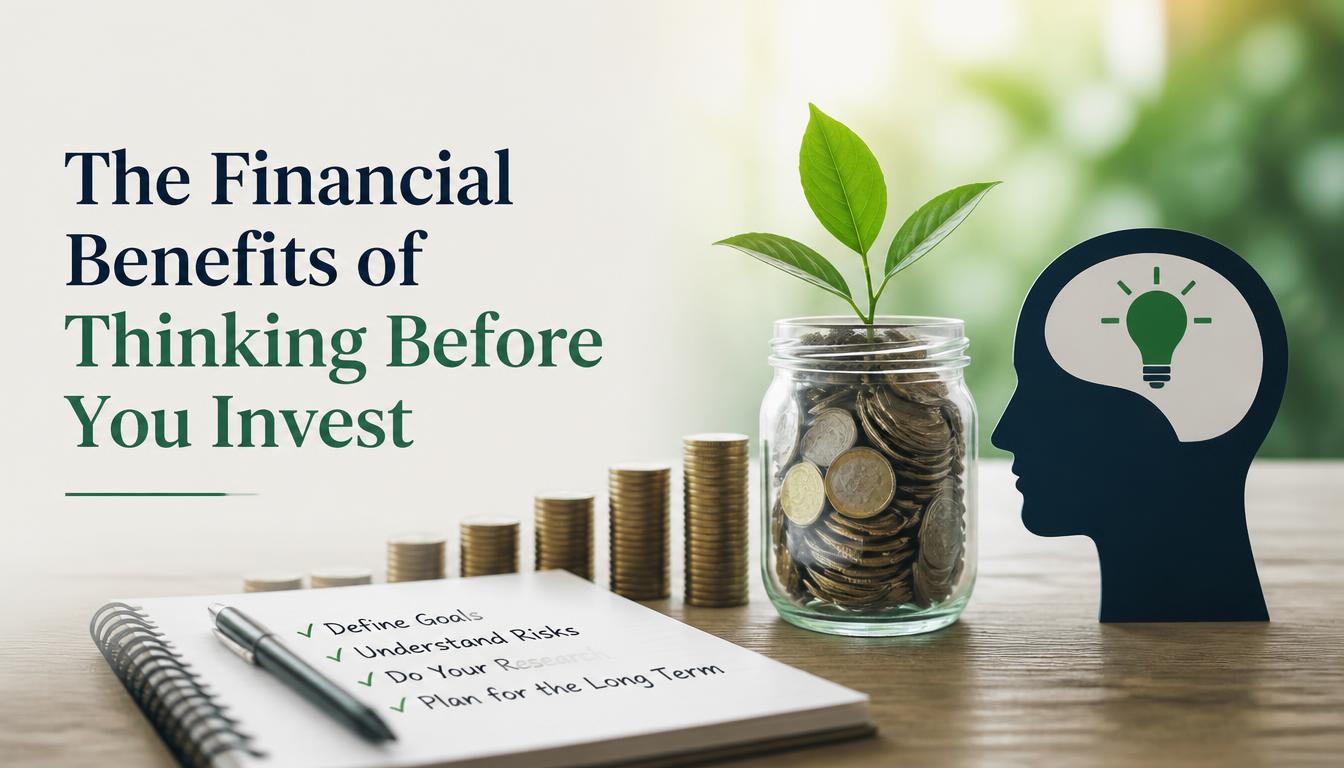
The financial markets are often described as rational machines driven by cold, hard data, balance sheets, and economic indicators. In reality, the markets are an absolute chaotic sea of human emotion. Greed, fear, panic, and hope drive prices up and down in ways that often defy pure mathematical logic.
Every single day, millions of retail and professional investors make decisions that cost them billions of dollars—not because they lack access to information, but because they lack the critical thinking skills to process that information objectively.
As Nobel laureate Daniel Kahneman and other behavioral economists have shown, our cognitive machinery is highly vulnerable to shortcuts and systemic errors when handling uncertainty and money. Our fast, instinctive System 1 thinking is designed to seek safety in numbers, run away from immediate pain, and grab quick rewards. While these traits kept our ancestors alive on the savannah, they are absolute poison for your investment portfolio.
Critical thinking is the ultimate shield for your wealth. By training your mind to step back from the market noise, identify cognitive biases, and apply logical evaluation frameworks, you can avoid catastrophic financial traps and compound your capital with high confidence. This guide will explore the massive financial benefits of critical thinking and provide you with a practical toolkit to make objective, highly profitable investment decisions.
1. The Cost of Cognitive Biases in FinanceTo build wealth, you do not need an extraordinary IQ; you need an extraordinary control over your emotions and cognitive biases. Let us examine the most common, destructive mental traps that wreck investor returns, and how critical thinking neutralizes them:
A. Herd Mentality (The Safety-in-Numbers Trap)- The Bias: Humans are social animals. When we see thousands of people buying a specific asset—be it a tech stock, real estate, or cryptocurrency—our System 1 brain screams: "Everyone else is doing it, so it must be safe and profitable!" This is how massive asset bubbles are formed.
- The Critical Counter: A critical thinker understands that the crowd is often most bullish at the absolute peak of a bubble. They ask: "What is the objective, fundamental value of this asset, independent of public enthusiasm? What evidence supports this valuation, and what is the counter-argument?"
- The Bias: Psychologists have proven that the pain of losing $1,000 is twice as intense as the pleasure of gaining $1,000. When an investment declines, our instinct is to avoid the pain of realizing the loss. We hold onto a failing stock, or worse, "double down" on it, hoping it will return to our break-even point.
- The Critical Counter: Critical thinking demands that we evaluate an asset based on its current prospects, not its historical purchase price. A critical thinker asks: "If I did not already own this asset, would I buy it today at its current price?" If the answer is no, they cut their losses immediately and allocate their capital to better opportunities.
- The Bias: Once we buy an asset, we subconsciously seek out information that validates our decision. We read bullish articles, join online forums of fellow investors, and ignore any warning signs or bearish reports.
- The Critical Counter: To combat confirmation bias, a critical thinker actively practices "steel-manning" the opposing view. Before buying any stock, they seek out the smartest, most logical bear case against it. If they cannot logically refute the bear case, they do not make the investment.
To evaluate any investment pitch—whether it comes from a slick Wall Street analyst, a social media influencer, or a relative at Thanksgiving dinner—you must run it through Carl Sagan's classic Baloney Detection Kit, adapted specifically for the financial world.
Apply these five critical rules to every investment opportunity:
Rule 1: Independent Confirmation of FactsNever trust an investment thesis that relies on a single source of data. If a company claims their new technology is "revolutionary," verify it. Look for third-party reviews, patent filings, and independent engineering audits.
Rule 2: Encourage Substantive DebateIf you are working with a financial advisor or considering a joint business venture, encourage debate. If the person pitching the investment gets defensive, impatient, or uses jargon to dodge your questions, view it as an immediate red flag. A legitimate, strong investment thesis can withstand intense, logical questioning.
Rule 3: Do Not Over-Index on AuthorityJust because a famous hedge fund manager or a billionaire is buying a stock does not mean you should blindly follow them. Authorities make mistakes, have different risk tolerances, and often have access to hedge hedges that you do not. Focus on the data and the logic of the thesis, not the status of the person pitching it.
Rule 4: Quantify Wherever PossibleVague, superlative claims are a favorite tool of financial promoters. Watch out for phrases like "exponential growth potential," "unparalleled market disruption," or "virtually risk-free." Demand specific numbers, audited balance sheets, and verifiable historical growth rates. If it cannot be measured, it cannot be trusted.
Rule 5: Occam's RazorIf an investment opportunity requires an incredibly complex, confusing explanation involving offshore accounts, intricate shell companies, and confusing algorithms to show how it makes money, step away. Occam's Razor states that the simplest explanation is usually the correct one. If the business model is too complicated to explain in three simple sentences, it is likely either a scam or a highly fragile enterprise.
3. The CRAAP Test for Financial IntelligenceIn the digital age, the challenge is not finding financial information; it is filtering out the garbage. To ensure your financial decisions are grounded in high-fidelity data, apply the CRAAP test to every report, article, or video you consume:
| Dimension | Financial Evaluation Rubric |
|---|---|
| Currency | Is the data up-to-date? Financial markets move fast. A balance sheet from 18 months ago is useless if the company has recently taken on massive debt or faced a lawsuit. |
| Relevance | Does the information directly impact your investment horizon? A short-term earnings miss is highly relevant to a day trader, but largely irrelevant to a 20-year index fund investor. |
| Authority | Who wrote the analysis? Are they an independent researcher, a biased shareholder, or a paid promoter? Check their credentials, historical track record, and potential conflicts of interest. |
| Accuracy | Is the data supported by primary sources, such as SEC filings (10-K, 10-Q) and audited financial statements? Or is it based on hearsay and unverified leaks? |
| Purpose | Why was this content created? Is the author trying to educate you, sell you a newsletter, short-sell the stock to drive the price down, or pump up the stock so they can sell their own shares? |
To systematically integrate critical thinking into your financial life, adopt this 3-step objective investment routine:
Step 1: Write an "Investment Thesis"Before clicking the buy button on any asset, write down a one-page document detailing exactly why you are investing. It must include:
- The core value proposition: How does this company make money, and why will it make more in the future?
- Key metrics: What are the current valuation multiples, debt levels, and cash flows?
- Specific exit triggers: Under what precise conditions will you sell? (e.g., "I will sell if revenue growth drops below 10%, or if the CEO resigns.")
Before investing, imagine that it is five years in the future, and your investment has gone completely to zero. Now, write down the history of how it failed.
- Did a competitor disrupt their technology?
- Did they run out of cash?
- Did regulatory changes destroy their business model?
This exercise forces your brain to bypass the excitement of potential gains and identify the real, structural risks of the asset.
Step 3: Schedule Regular Portfolio AuditsDo not check your portfolio hourly—this triggers System 1 emotional panic. Instead, set up a quiet, quarterly review. Step away from the daily market charts, review your original investment theses, check if the fundamental data has changed, and make logical, slow, System 2 adjustments.
Conclusion: The Compounding Return on LogicMany people think that successful investing requires a deep mathematical background or insider secrets. In truth, it requires something much rarer: disciplined, unemotional critical thinking.
By choosing to pause, challenge assumptions, apply Carl Sagan's baloney detection rules, and use objective source evaluation, you protect yourself from the emotional madness of the crowd. The financial benefits of critical thinking are immense, compound over time, and will ultimately pave the path to true, sustainable financial freedom.
The Financial Benefits of Thinking Before You Invest
Protect your money from emotional biases and market hype. Discover the massive financial benefits of critical thinking and how to analyze investments logically.