
How to Build and Monetize a AI Micro-SaaS With Zero Code in 2026

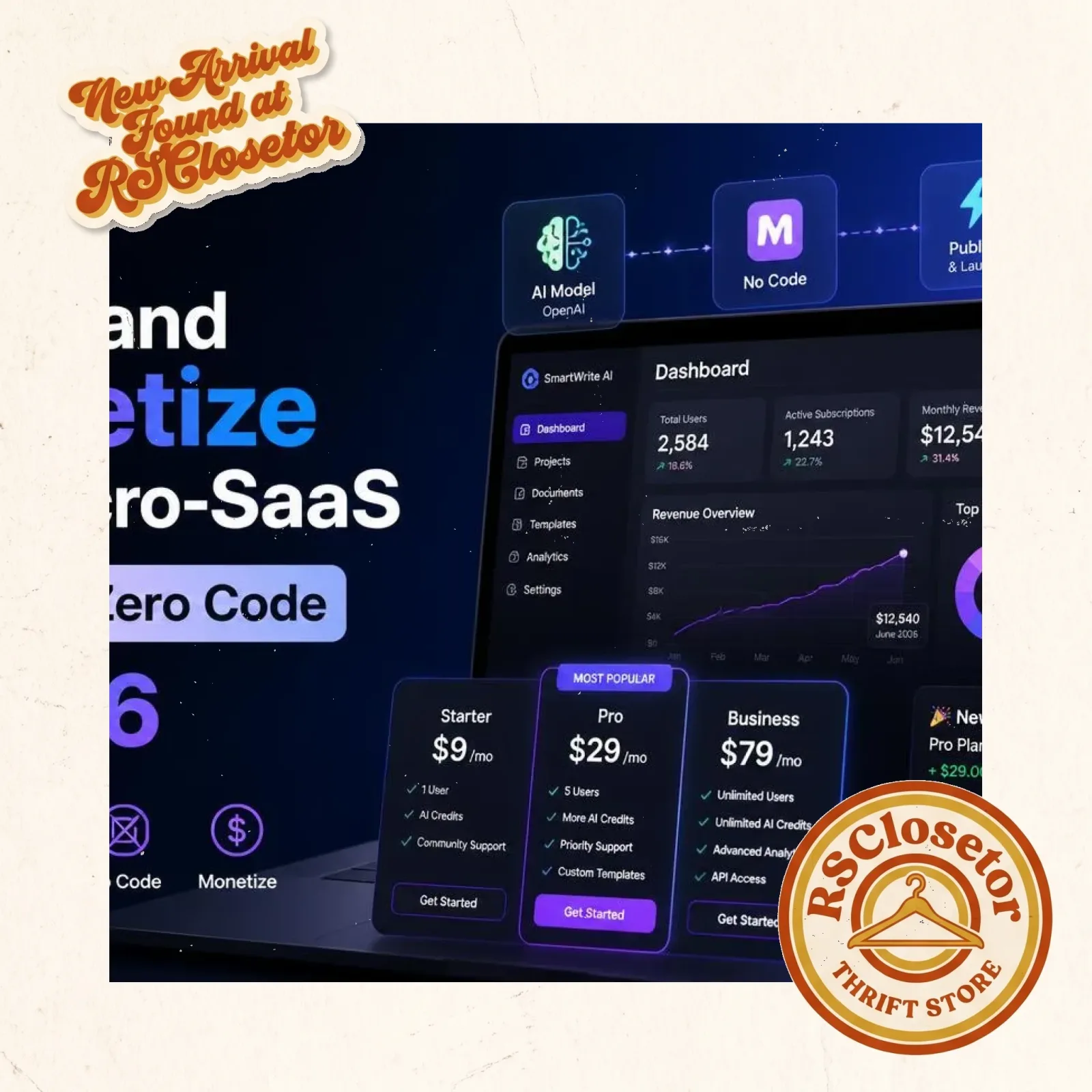
The barrier to software engineering has fundamentally collapsed. Two years ago, building a micro-SaaS required proficiency in React, Node.js, and database architecture. Today, anyone with a clear problem to solve and an understanding of workflow logic can deploy production-ready, AI-native software in a single weekend. This isn't about assembling clunky web pages with basic drag-and-drop builders; it is about orchestrating powerful large language models, vector databases, and payment gateways into cohesive, automated value engines.
Having advised dozens of non-technical founders through this exact transition, I have watched the traditional software development lifecycle compress from six months to six hours. If you want to build a profitable micro-SaaS with zero programming knowledge, you need to abandon legacy paradigms and master the modern AI-first, no-code stack.
The 2026 No-Code AI Stack: What Actually WorksThe biggest mistake first-time no-code founders make is picking tools based on marketing hype rather than architectural capability. A resilient micro-SaaS requires three distinct layers: a user interface, an orchestration and business logic layer, and a scalable data layer.
1. The Interface Layer: Bubble vs. FlutterFlow vs. SoftrYour front-end is where your user experiences the value proposition. For complex web applications requiring custom dashboards and dynamic states, Bubble remains the undisputed heavyweight champion, despite its steeper learning curve. If your product is mobile-first, FlutterFlow generates native iOS and Android code without you ever opening an IDE. For content-heavy directories or internal tool wrappers, Softr integrated with Airtable provides the fastest path to market.
2. The Logic & AI Orchestration Layer: Make.com and FlowiseThis is where the magic happens. While Zapier is great for simple linear tasks, Make.com is the absolute standard for complex, conditional micro-SaaS backends. It handles multi-step routing, error handling, and API payloads effortlessly. For advanced AI features—like Retrieval-Augmented Generation (RAG) or multi-agent systems—visual node-based builders like Flowise or Langflow allow you to pipe OpenAI, Anthropic, or open-source models together visually.
3. The Database & Auth Layer: Xano and SupabaseNever rely solely on basic spreadsheet databases for a production SaaS that handles user data at scale. Xano acts as a powerful, no-code backend-as-a-service equipped with a robust PostgreSQL database, API endpoints, and scalable serverless functions. Paired with secure authentication providers like Auth0 or built-in alternatives, your app will match the security posture of traditionally coded platforms.
Step-by-Step Blueprint: Building an AI Content Repurposing Micro-SaaSTo ground this in reality, let's look at the exact blueprint for building "ClipScribe"—an automated micro-SaaS that takes long-form YouTube URLs and converts them into optimized LinkedIn carousel copy and Twitter threads.
Step 1: Define the Niche and the Narrow Value PropositionMicro-SaaS thrives on specificity. Do not build a generic "AI writing tool." Build a tool specifically for B2B SaaS growth marketers who need to turn product update videos into LinkedIn thought-leadership posts. The narrower your ICP (Ideal Customer Profile), the easier your marketing and prompt engineering become.
Step 2: Constructing the Data Pipeline in Make.comYour user inputs a YouTube URL into your Bubble frontend. This action triggers a webhook pointing directly to Make.com. The scenario executes the following sequence:
- Fetch Transcript: Calls a third-party API to pull the raw transcript text from the YouTube video ID.
- Text Chunking: Splits the transcript into manageable semantic tokens to prevent exceeding context windows.
- LLM Processing: Sends the text to the OpenAI API (GPT-4o) with a heavily constrained, highly specific system prompt enforcing tone, format, and platform constraints.
- Database Storage: Saves the generated outputs back into Xano, linked directly to the user’s account ID.
A SaaS without revenue is just a costly hobby. Integrating Stripe into a no-code stack takes less than an hour. Using built-in plugins or Make.com webhooks, you can set up tiered subscription models (e.g., $29/month for 50 transformations). When a user successfully checks out on Stripe, a webhook fires back to your database, updating their user status from free_trial to active_subscriber and unlocking API execution limits.
While building the product has never been easier, maintaining a sustainable business model introduces unique friction points. You must navigate these structural realities:
- API Latency and Timeouts: Large language models take time to think. If your Make.com scenario takes 45 seconds to generate a response, your frontend will time out unless you implement asynchronous processing (e.g., returning a "Your report is generating, we'll email you when it's ready" state).
- Token Cost Management: Users will abuse your system. If you offer unlimited generations for a flat fee, heavy users will eat your margins alive through OpenAI and Anthropic API costs. Always implement rate-limiting or credit systems.
- Platform Dependency: You are building on rented land. If Bubble or Make.com changes its pricing model or experiences an outage, your entire business stalls. Diversification and understanding data migration are critical long-term survival skills.
The biggest trap for aspiring founders is spending three weeks building an app nobody wants. Before touching a single no-code builder, execute this validation sprint:
- Build a Typeform + Make.com MVP: Create a landing page using Framer or Carrd. Have users paste their URL into a Typeform. Route that input through Make.com to manually generate the output and email it to them within 2 hours.
- Manual Fulfillment at Scale: If you manually process 20 requests a day and users happily pay or rave about the results, you have product-market validation.
- Automate the Backend: Only after proving demand do you invest the weekend into building the actual Bubble dashboard and automated pipeline.Conclusion: The Era of the Solopreneur Technologist
You do not need a computer science degree to build software anymore; you need product vision, empathy for user pain points, and a willingness to wire APIs together. The tools listed above are mature, reliable, and capable of generating meaningful monthly recurring revenue. Stop waiting for a technical co-founder. Open a browser tab, map your data flows, and ship your first AI micro-SaaS today.
How to Build and Monetize a AI Micro-SaaS With Zero Code in 2026
Learn how to build and monetize a profitable AI micro-saaS with zero programming knowledge using modern no-code tools and LLM workflows.