
Stop Leaving Money on the Table: Advanced Product Bundling Strategies to Maximize Average Order Value

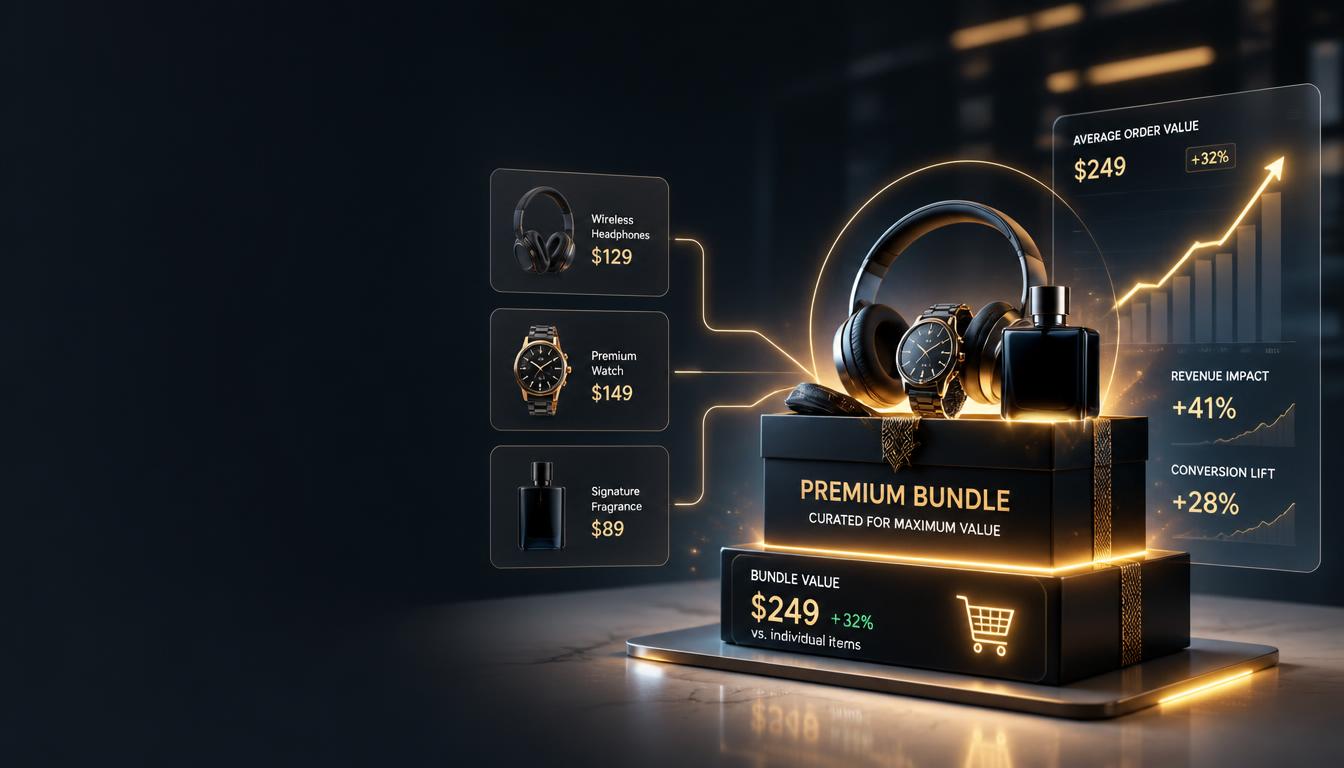
Most e-commerce brands treat product bundling as an afterthought. They toss two slow-moving SKUs together, slap a 10% discount on them, and wonder why their Average Order Value (AOV) refuses to budge. Worse yet, they rely on generic Amazon-style widgets that recommend entirely unrelated items, creating friction instead of driving conversions.
If you want to move the needle on AOV sustainably, you need to view bundling not as a discount mechanism, but as a curation architecture. Over the last decade of auditing and scaling direct-to-consumer (DTC) brands, I have learned that the difference between a failing bundle strategy and a seven-figure revenue driver comes down to consumer psychology, margin protection, and structural placement.
The Psychology of Frictionless Decision-MakingModern consumers suffer from severe decision fatigue. When a shopper lands on your product detail page (PDP) and is confronted with endless options, variant choices, and upsell prompts, cortisol levels spike. The default response to cognitive overload is abandonment.
Product bundling bypasses this paralysis by pre-solving a problem. Instead of asking the customer to curate their own routine, solve their own pain points, or guess which accessories are compatible, you present a singular, holistic solution.
Why Pure Bundles Outperform Mixed Bundles Every TimeWhen engineering bundles, you have two primary options: mixed-product bundles (selling items A, B, and C together that can also be bought separately) and pure bundles (items only available as a collective set).
- Mixed Bundles: Great for introductory offers, but they invite price anchoring. Customers will calculate the individual costs of items A and B, scrutinizing whether the discount is "worth it."
- Pure Bundles: Highly effective for proprietary or consumable brands. By removing the individual components from the storefront, you eliminate price comparison. The bundle becomes its own unique SKU, allowing you to capture higher margins without triggering the customer's internal price-check mechanism.
To architect bundles that actually drive AOV without eroding your gross margins, you must align your offerings with specific consumer behaviors. Here are the three frameworks we implement with high-growth e-commerce brands.
1. The Consumable Replenishment Bundle (The Subscription Catalyst)If you sell consumables—skincare, supplements, coffee, or pet supplies—the single-item transaction is a margin killer due to customer acquisition costs (CAC). To maximize AOV and Lifetime Value (LTV), you must bundle for consumption velocity.
Instead of selling a single bottle of vitamin C serum, bundle it with the daily cleanser and the SPF moisturizer. Frame it as the "Morning Protocol." Furthermore, incentivize the subscription model by offering an additional tier of savings. When a customer subscribes to a multi-product bundle, your blended CAC drops significantly relative to the massive lift in initial order value.
2. The Ecosystem and Compatibility BundleCustomers fear buying the wrong thing. If they purchase a hardware device, a camera, or a specialized tool, the anxiety of needing missing cables, cases, or maintenance kits is real.
An ecosystem bundle completely eliminates this anxiety. Package the core hero product with all necessary accessories, consumables, and warranties. Price it slightly below the cumulative cost of buying everything separately, but ensure the bundle's total price point is higher than the standalone hero product.
Example: A specialty cookware brand bundles a cast-iron skillet with a custom-fit silicone handle, a chainmail cleaning scrubber, and a bottle of seasoning oil. The AOV jumps from $65 to $112, while fulfillment costs increase by mere pennies because everything fits inside a single shipping box.
3. The "Gift to Self" or Aspirational BundleLuxury and lifestyle brands must avoid cheapening their perceived value with traditional discounting. Instead of using percentage-off pricing, use value-add bundling.
Combine a flagship item with an exclusive, limited-edition accessory that cannot be purchased anywhere else. This taps into status psychology and exclusivity. The customer isn't buying a "discounted set"; they are upgrading their entire experience.
The Mathematical Reality: Protecting Gross Margins While Scaling AOVA high AOV is meaningless if your gross margin collapses under the weight of shipping costs and heavy discounts. Before launching any bundle, run the unit economics through a rigorous stress test.
Consider dimensional weight and fulfillment fees. If bundling two heavy items pushes your package into a higher dimensional shipping tier, your profit margins might vanish despite the higher top-line revenue. Always test your bundles digitally using pre-purchase and post-purchase upsell apps before committing to physical pre-kitting at your 3PL.
Pre-Purchase vs. Post-Purchase Bundling PlacementWhere your customer encounters the bundle dictates its conversion rate.
- On the PDP (Pre-Purchase): Best for routine-based and ecosystem bundles. Use sticky add-to-cart bars or native bundle widgets directly above the "Add to Cart" button. Keep the copy focused on outcomes, not features.
- In the Cart Drawer (Pre-Purchase): This is prime real estate. Use a dynamic reward bar (e.g., "Add $15 more to unlock the travel kit bundle") to leverage loss aversion and incentivize cart value expansion.
- Post-Purchase One-Click Upsells: Do not clutter the initial PDP with too many choices. Instead, capture the initial transaction cleanly, then present an exclusive, one-time-only bundle offer on the confirmation page before they close the tab. Because their credit card is already tokenized, conversion rates for post-purchase bundles often outperform native PDP bundles.
If you want to revitalize your store’s AOV this quarter, stop guessing and execute this step-by-step process:
- Analyze Your Analytics: Identify your top 20% most frequently co-purchased items using your Shopify or WooCommerce analytics. Do not invent bundles out of thin air; let existing customer behavior guide you.
- Audit Your Margins: Calculate the exact cost of goods sold (COGS), pick-and-pack fees, and shipping overhead for the prospective bundle combination. Ensure your blended margin remains above your target threshold (typically 65% minimum for DTC).
- Design the Offer Architecture: Create a compelling name for the bundle that speaks to a specific outcome or persona (e.g., "The Deep Hydration Routine" instead of "Skin Care Set #3").
- Deploy and Iterate: Launch the bundle via a dedicated landing page or a clean PDP variant. A/B test pricing thresholds—sometimes a $100 bundle converts at the exact same rate as an $85 bundle, instantly boosting top-line revenue with zero additional traffic.
Product bundling is the ultimate leverage point in e-commerce. When executed with strategic precision, it transforms casual browsers into high-value loyalists while protecting your bottom line from skyrocketing acquisition costs. Stop selling isolated items and start engineering complete solutions.
Stop Leaving Money on the Table: Advanced Product Bundling Strategies to Maximize Average Order Value
Discover proven product bundling strategies to skyrocket your e-commerce average order value (AOV) and protect profit margins today.